A 33-fold spike has been witnessed in the occurrence of a blood clot in the lung, which can be fatal, in 30 days after getting infected with coronavirus, found a new study.
Another five-fold rise in the risk of getting deep vein thrombosis (DVT) has been linked with contracting Covid, it also said.
The findings of the research were published in the British Medical Journal on Thursday.
The study was carried out by Anne-Marie Fors Connolly of Umeå University in Sweden and her colleagues. The team looked to check the risk of DVT, pulmonary embolism, which is a blood clot in the lung, and other types of bleeding in over one million people, who were also the confirmed cases of Covid.
They also found a two-fold hike in the risk of bleeding after 30 days of the infection.
After becoming infected with coronavirus, patients remain at heightened risk of pulmonary embolism for six months. For bleeding and DVT, the risk is for two and three months, respectively.
“Pulmonary embolism can be fatal, so it is important to be aware [of this risk]. If you suddenly find yourself short of breath, and it doesn’t pass, [and] you’ve been infected with the coronavirus, then it might be an idea to seek help, because we find this increased risk for up to six months,” Connolly told the Guardian.
The World Health Organization’s international pandemic treaty signals the organization may be planning to seize power over health systems and push the world toward universal health coverage.
The globalist cabal is planning to monopolize health systems worldwide through the creation of an international pandemic treaty that makes the World Health Organization (WHO) the sole decision maker on pandemic matters.
The WHO may also be planning to seize power over health systems more broadly. Tedros Adhanom Ghebreyesus has stated that his “central priority” as director-general of the WHO is to push the world toward universal health coverage.
In the name of keeping everyone “safe” from infection, the globalist cabal has justified unprecedented attacks on democracy, civil liberties and personal freedoms, including the right to choose your own medical treatment.
Now, the WHO is gearing up to make its pandemic leadership permanent, and to extend it into the health care systems of every nation. The idea is to implement universal health care organized by the WHO as part of the Great Reset.
If this treaty goes through, the WHO would have the power to call for mandatory vaccinations and health passports, and its decision would supersede national and state laws.
Considering the WHO changed its definition of “pandemic” to “a worldwide epidemic of a disease,” removing the requirement of high morbidity, just about anything could be made to fit the pandemic criterion, including obesity.
The SMART Health Cards system is used by more than a dozen countries, 25 U.S. states, Puerto Rico and Washington, D.C.; the Australian Parliament is pushing a “Trusted Digital Identity Bill”; U.S. Congress is pushing the “Improving Digital Identity Act” and the WHO has signed a deal with a Deutsche Telekom subsidiary to build the first global digital vaccine passport.
All of these have one thing in common: the end goal, which is to expand them into a souped-up, global social credit system.
A new peer-reviewed study shows more than two-thirds of adolescents with COVID-19 vaccine-related myopericarditis had persistent heart abnormalities months after their initial diagnosis, raising concerns for potential long-term effects and contradicting claims by health officials that the condition is “mild.”
A new peer-reviewed study shows more than two-thirds of adolescents with COVID-19 vaccine-related myopericarditis had persistent heart abnormalities months after their initial diagnosis, raising concerns for potential long-term effects.
The findings, published March 25 in the Journal of Pediatrics, challenge the position of U.S. health agencies, including the Centers for Disease Control and Prevention (CDC), which claim heart inflammation associated with the Pfizer and Moderna mRNA vaccines is “mild.”
Researchers at Seattle Children’s Hospital reviewed cases of patients younger than 18 years old who presented to the hospital with chest pain and an elevated serum troponin level between April 1, 2021, and Jan. 7, 2022, within one week of receiving a second dose of Pfizer’s vaccine.
While 35 patients fit the criteria, 19 were excluded for various reasons. Cardiac magnetic resonance imaging (MRI) of the remaining 16 patients was performed three to eight months after they were first examined. The MRIs showed 11 had persistent late gadolinium enhancement(LGE), although levels were lower than in previous months.
According to the study, “The presence of LGE is an indicator of cardiac injury and fibrosis and has been strongly associated with worse prognosis in patients with classical acute myocarditis.”
In a meta-analysis of eight studies, LGE was found to be a predictor of all-cause death, cardiovascular death, cardiac transplant, rehospitalization, recurrent acute myocarditis and requirement for mechanical circulatory support.
Similarly, an 11-study meta-analysis found the “presence and extent of LGE to be a significant predictor of adverse cardiac outcomes.”
Researchers said that while symptoms “were transient and most patients appeared to respond to treatment,” the analysis showed a “persistence of abnormal findings.”
The results “rais[e] concerns for potential longer-term effects,” researchers wrote, adding that they plan to repeat imaging at one year after the vaccine to assess whether abnormalities have resolved.
“The paper provides more evidence that myocarditis in adolescents that result from COVID-19 vaccines is very serious,” said Dr. Madhava Setty, senior science editor for The Defender.
“All patients had significantly elevated serum troponin levels indicative of heart damage. And LGE, which is indicative of poor outcome, was present in more than two-thirds of the kids.”
The study stated, “All patients had elevated serum troponin levels (median 9.15 ng/mL, range 0.65-18.5, normal < 0.05 ng/mL).”
“These young patients had a median troponin level of 9.15 — more than 20 times greater than the levels found in people suffering heart attacks,” Setty said.
Commenting on the study, Dr. Marty Makary, surgeon and public policy researcher at Johns Hopkins University, tweeted “CDC has a civic duty to rigorously study the long-term effects of vaccine-induced myocarditis.”
CDC has a civic duty to do rigorously study the long-term effects of vaccine-induced myocarditis. New follow-up study 3-8 months after myocarditis shows the MRI heart abnormality of late gadolinium enhancement seen in 63% of children. Merits further study. https://t.co/klPVsnqrkc
Dr. Anish Koka, a cardiologist, told The Epoch Times the study suggests 60% to 70% of teenagers who get myocarditis from a COVID vaccine may be left with a scar on their heart.
“Certainly, children who had chest pain severe enough to merit seeking medical attention need to at least make sure they get a follow-up MRI,” Koka said, adding that the findings “should have clear implications for the discussion around vaccines, especially for high-risk male teenagers … and definitely for vaccine mandates.”
Myocarditis, or inflammation of the heart, is a severe and life-shortening disease. It was virtually unknown in young people until it became a recognized side effect of mRNA COVID vaccines, especially in boys and young men.
Pericarditis is inflammation of the pericardium, a sac-like structure with two layers of tissue that surrounds the heart to hold it in place and help it work.
According to the CDC, the most at-risk group is 16- and 17-year-old males, who have reported rates of 69 per million after the second dose of Pfizer’s COVID vaccine, although that number is likely underreported.
The CDC presentation also reported that in three-month follow-up evaluations, less than one-third of adolescents 12 to 17 who suffered vaccine-induced myocarditis (reported in Vaccine Safety DataLink) had fully recovered.
The 69-per-million rate the CDC uses to determine the incidence of myocarditis in 16- and 17-year-olds came from the agency’s Vaccine Adverse Event Reporting System (VAERS) — a U.S. government-run database that receives reports of vaccine adverse events.
One of the biggest limitations of passive surveillance systems, like VAERS, is that the system “receives reports for only a small fraction of adverse events,” according to the Department of Health and Human Services website.
This incidence matches nearly exactly with findings from a study that used the Vaccine Safety DataLink system, which showed 37.7 12- to 17-year-olds per 100,000 suffered myo/pericarditis after their second vaccine dose.
This indicates an incidence rate that is almost six times higher than the 69-per-million rate reported by the CDC.
In a preprint study from Kaiser Permanente, the incidence of myocarditis in 18- to 24-year-old males post-vaccination was even higher — at 537 per million, or 7.7 times higher than the statistics reported by the CDC.
No such thing as ‘mild’ heart damage
A paper published Jan. 14 in Circulation summarized the clinical course of 139 young patients between the ages of 12 and 20 who were hospitalized for myocarditis following COVID vaccination.
Of those patients, 19% were taken into intensive care, two required infusions of potent intravenous drugs used to raise critically low blood pressure and every patient had an elevated troponin level.
Troponin is an enzyme specific to cardiac myocytes. Levels above 0.4 ng/ml are strongly suggestive of heart damage.
The paper concluded, “Most cases of suspected COVID-19 vaccine myocarditis occurring in persons <21 years have a mild clinical course with rapid resolution of symptoms.”
“We suppose [a ‘mild clinical course] refers to the 81% who did not go to the ICU or the fact that none died or required ECMO (Extracorporeal Membrane Oxygenation, a desperate means to keep the body oxygenated when a patient’s heart or lungs have completely failed),” wrote Setty and Josh Mitteldorf, Ph.D., a theoretical physicist, in an articlecritiquing the Circulation paper.
“When does a ‘mild clinical course’ require hospitalization for a two-day median length of stay?” they asked. “How does anyone know if symptoms rapidly resolve?”
“We don’t know what it will do to young boys in the long term, especially since every patient had some damage to their heart as evidenced by significantly abnormal troponin levels,” Setty and Mitteldorf wrote. “And we don’t fully understand the mechanism by which the vaccines cause myocarditis.”
While the US is planning to increase its military presence in Eastern Europe to “protect its allies against Russia”, internal documents show what American “protection” in practical terms means.
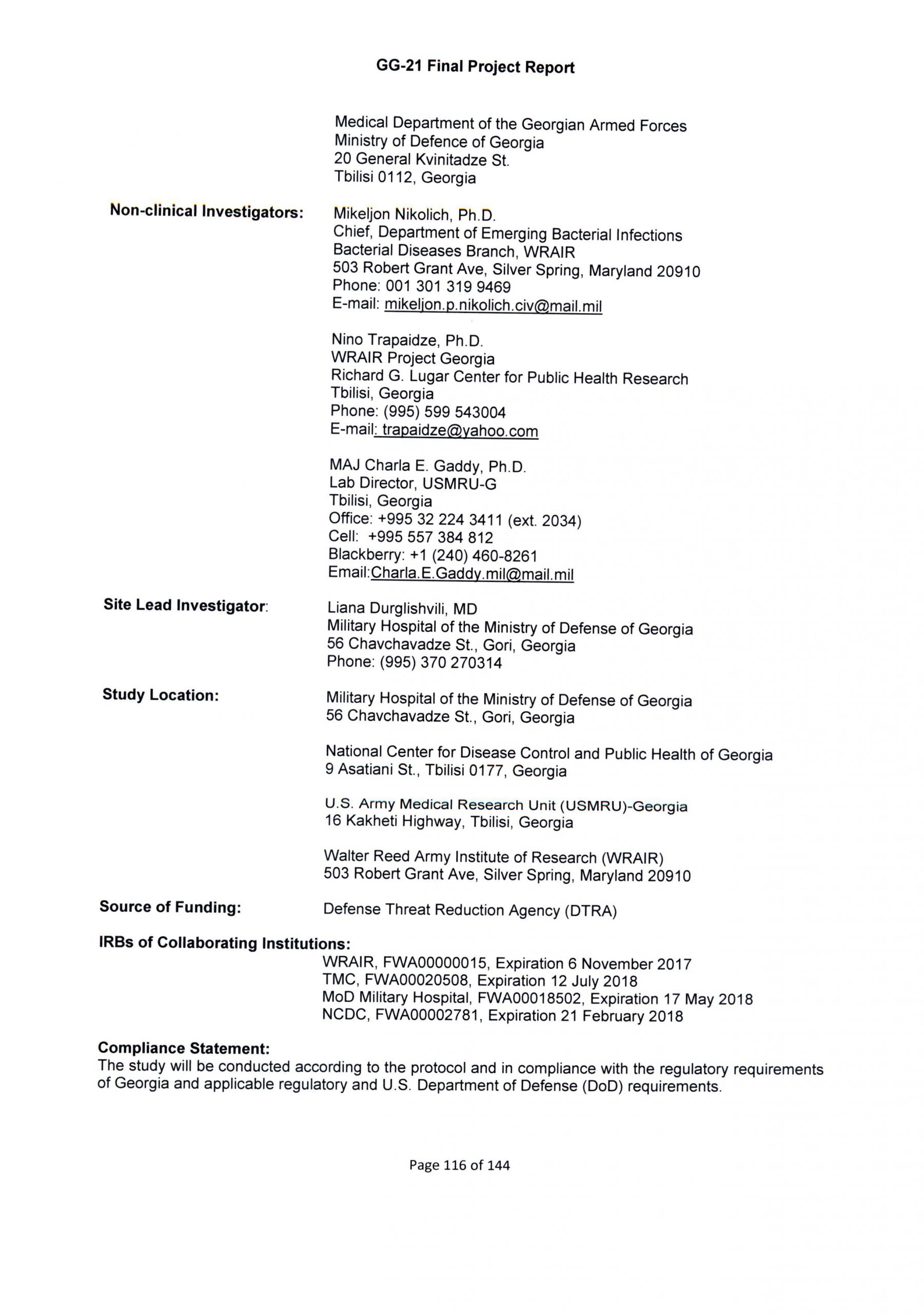
The Pentagon has conducted biological experiments with a potentially lethal outcome on 4,400 soldiers in Ukraine and 1,000 soldiers in Georgia. According to leaked documents, all volunteer deaths should be reported within 24 h (in Ukraine) and 48 h (in Georgia).
Both countries are considered the most loyal US partners in the region with a number of Pentagon programs being implemented in their territory. One of them is the $2.5 billion Defense Threat Reduction Agency (DTRA) Biological engagement program which includes research on bio agents, deadly viruses and antibiotic-resistant bacteria being studied on the local population.
Project GG-21: “All volunteer deaths will be promptly reported”
The Pentagon has launched a 5-year long project with a possible extension of up to 3 years code-named GG-21: “Arthropod-borne and zoonotic infections among military personnel in Georgia”. According to the project’s description, blood samples will be obtained from 1,000 military recruits at the time of their military registration physical exam at the Georgian military hospital located in Gori.
The samples will be tested for antibodies against fourteen pathogens:
Bacillus anthracis
Brucella
CCHF virus
Coxiella burnetii
Francisella tularensis
Hantavirus
Rickettsia species
TBE virus
Bartonella species
Borrelia species
Ehlrichia species
Leptospira species
Salmonella typhi
WNV
The amount of blood draw will be 10 ml. Samples will be stored indefinitely at the NCDC (Lugar Center) or USAMRU-G and aliquots might be sent to WRAIR headquarters in US for future research studies. Walter Reed Army Institute of Research (WRAIR) is the largest biomedical research facility administered by the U.S. Department of Defense. The results of the blood testing will not be provided to the study participants.
Such a procedure cannot cause death. However, according to the project report, “all volunteer deaths will be promptly reported (usually within 48 h of the PI being notified)” to the Georgian Military Hospital and WRAIR.
According to the GG-21 project report, “all volunteer deaths will be promptly reported” to the Georgian military hospital and WRAIR, USA.
The soldiers’ blood samples will be stored and further tested at the Lugar Center, a $180 million Pentagon-funded facility in Georgia’s capital Tbilisi.
The Georgian project GG-21 has been funded by DTRA and implemented by American military scientists from a special US Army unit code-named USAMRU-G who operate in the Lugar Center. They have been given diplomatic immunity in Georgia to research bacteria, viruses and toxins without being diplomats. This unit is subordinate to the Walter Reed Army Institute of Research (WRAIR).
The Lugar Center is the $180 million Pentagon-funded biolaboratory in Georgia’s capital Tbilisi.A diplomatic car with a registration plate of the US Embassy to Tbilisi in the car park of the Lugar Center. US scientists working at the Pentagon laboratory in Georgia drive diplomatic vehicles as they have been given diplomatic immunity. Photos: Dilyana Gaytandzhieva
Documents obtained from the US Federal contracts registry show that USAMRU-G is expanding its activities to other US allies in the region and is “establishing expeditionary capabilities” in Georgia, Ukraine, Bulgaria, Romania, Poland, Latvia and any future locations. The next USAMRU-G project involving biological tests on soldiers is due to start in March of this year at the Bulgarian Military Hospital in Sofia.
Project UP-8: All deaths of study participants should be reported within 24 h
The Defense Threat Reduction Agency (DTRA) has funded a similar project involving soldiers in Ukraine code-named UP-8: The spread of Crimean-Congo hemorrhagic fever (CCHF) virus and hantaviruses in Ukraine and the potential need for differential diagnosis in patients with suspected leptospirosis. The project started in 2017 and was extended few times until 2020, internal documents show.
According to the project’s description, blood samples will be collected from 4,400 healthy soldiers in Lviv, Kharkov, Odesa and Kyiv. 4,000 of these samples will be tested for antibodies against hantaviruses, and 400 of them – for the presence of antibodies against Crimean-Congo hemorrhagic fever (CCHF) virus. The results of the blood testing will not be provided to the study participants.
There is no information as to what other procedures will be performed except that “serious incidents, including deaths should be reported within 24 hours. All deaths of study subjects that are suspected or known to be related to the research procedures should be brought to the attention of the bioethics committees in the USA and Ukraine.”
Blood samples from 4,000 Ukrainian soldiers will be tested for hantaviruses. Another 400 blood samples will be tested for CCHF under the DTRA-sponsored Ukrainian Project UP-8.Project UP-8: “Serious incidents, including deaths should be reported within 24 hours. All deaths of study subjects that are suspected or known to be related to the research procedures should be brought to the attention of the bioethics committees in the USA and Ukraine.” Source: ukr-leaks.org
DTRA has allocated $80 million for biological research in Ukraine as of 30 July 2020, according to information obtained from the US Federal contracts registry. Tasked with the program is the US company Black &Veatch Special Projects Corp.
Another DTRA contractor operating in Ukraine is CH2M Hill. The American company has been awarded a $22.8 million contract (2020-2023) for the reconstruction and equipment of two biolaboratories: the State Scientific Research Institute of Laboratory Diagnostics and Veterinary-Sanitary Expertise (Kyiv ILD) and the State Service of Ukraine for Food Safety and Consumer Protection Regional Diagnostic Laboratory (Odesa RDL).
US personnel are indemnified for deaths and injuries to the local population
The DTRA activities in Georgia and Ukraine fall under the protection of special bilateral agreements. According to these agreements, Georgia and Ukraine shall hold harmless, bring no legal proceedings and indemnify the United States and its personnel, contractors and contractors’ personnel, for damage to property, or death or injury to any persons in Georgia and Ukraine, arising out of activities under this Agreement. If DTRA-sponsored scientists cause deaths or injuries to the local population they cannot be held to account.
Furthermore, according to the US-Ukraine Agreement, claims by third parties for deaths and injuries in Ukraine, arising out of the acts or omissions of any employees of the United States related to work under this Agreement, shall be the responsibility of Ukraine.
A convergence of horrifying events have set into a motion an irreversible collapse of food production and crop harvests that will lead to global famine all the way through 2024. These events cannot be stopped for the simple reason that plants take time to grow. You can’t create crops instantly, and if they don’t get planted (or they get destroyed), there’s no instant replacement.
The reasons for the coming global famine include:
Floods and droughts causing sharp drops in crop production in China, Russia and the USA, among other nations.
Economic sanctions against Russia causing a halting of exports for food and fertilizer.
War in Ukraine, leading to a halting of the 2022 planting season for wheat, corn, soy and other crops.
War in the Black Sea, blocking ship movements in the ports (such as Odessa) which normally export crops.
The Biden admin’s shutting down of fossil duel production in the USA, adding significant costs to fertilizers and agricultural operations.
Global fiat currency money printing, making food inflation reach atrocious levels.
Importantly, all this coalesces into two primary problems that will now accelerate across the world:
Food SCARCITY
Food INFLATION
Scarcity, of course, means there’s no remaining supply no matter what the cost. Inflation means the food that is available will be significantly higher in price. Both of them cause people to panic, ultimately leading to widespread civil unrest (see below).
Understanding farm and crop inputs
Farmers are right now reporting a roughly 300% increase in their cost to produce crops such as wheat. This is due to three primary inputs:
The cost of fertilizer and seed.
The cost of fuel to power agricultural equipment.
The availability of tractors and other equipment (and their parts) in order to carry out mechanized agricultural operations.
Importantly, all three of these inputs are heavily strained due to the conditions mentioned above.
In addition to these factors, fuel costs significantly elevate transportation expenses to transport grains to grain storage and milling providers. Thus, rising fuel costs hit farmers twice: First for the cost of running their equipment, and secondly in the transportation costs.
Sadly, it looks like diesel fuel is headed toward $6 / gallon, and this is going to put severe upward pressure on food prices across the board. As I say in the podcast, elections have consequences… and rigged elections have dire consequences. (Joe Biden is punishing America with economic sanctions against our entire energy sector while having no such sanctions on Russia’s energy exports.)
Fertilizer costs have tripled, and fertilizer supply is growing scarce
Fertilizer prices have tripled and will likely go higher, especially as Russia has halted fertilizer exports and shut down natural gas pipelines to Western Europe. As a result, the fertilizer supply is growing scarce. About 5 billion people on the planet depend on fossil fuel-created fertilizer for their primary source of food. Thus, without fertilizer — if it were to go to zero — about 5 billion people starve to death.
I am not predicting the starvation of 5 billion people, since fertilizer production isn’t zero. But it is easily down by 25% – 30% right now, perhaps more, and that means somewhere approaching 2 billion people (or more) are going to face real famine / starvation in the crop seasons ahead. Very few people understand that food comes from fertilizer which is made using hydrocarbons. This is why left-wing activists are so eager to shut down pipelines, having no clue this will shut down their own food production as a result.
Extreme food scarcity to become apparent at the retail level this summer
There is a delay time between crop yield collapse and food scarcity at retail (grocery stores). Right now in March, we are eating the winter harvest of wheat. By late summer, we will be depending on wheat from the spring wheat crops around the world, and those crops just aren’t getting planted at the level necessary to feed the world.
The StrangeSounds.org website recently published a good overview of what they call the “wheat apocalypse.” From that article:
The wheat outlook looks grim… All over the world…
A limited supply of soft white wheat, the primary type of wheat grown in the Inland Northwest, has helped lead to a six-year low for wheat exports from the United States. That’s according to the USDA wheat report for February. The report also states that 71 percent of U.S. winter wheat is being hit by drought in 2022.
Egypt’s food security crisis now poses an existential threat to its economy. The fragile state of Egypt’s food security stems from the agricultural sector’s inability to produce enough cereal grains, especially wheat, and oilseeds to meet even half of the country’s domestic demand.
[China’s] Minister of Agriculture and Rural Affairs Tang Renjian said that rare heavy rainfall last year delayed the planting of about one-third of the normal wheat acreage.
Drought has shriveled Canada’s wheat crop to its smallest in 14 years, and its canola harvest to a nine-year low, a government report showed on Monday.
Parched soils and record-hot temperatures in Canada’s western crop belt sharply reduced farm yields of one of the world’s biggest wheat-exporting countries and largest canola-growing nation. The drought has forced millers and bakers to pay more for spring wheat, and drove canola prices to record highs.
On top of all that, Hungary has halted all grain exports in order to protect its domestic supply. In this article on Natural News, author JD Heyes lists the countries most likely to experience serious disruptions due to food scarcity. They include Egypt, Thailand and the Philippines.
By this summer, food shelves are going to look frighteningly empty across America, Canada and Western Europe
The upshot of all this is that food shelves are going to look downright frightening in 2022, and for the shelves that actually have food, it’s going to cost perhaps twice as much. Some items might see prices triple.
Even Reuters is now openly reporting that a United Nations agency says food inflation has hit 20%. And those are slightly old numbers. By the time they factor in the summer and fall of 2022, it’s going to be much closer to 50%.
Shockingly, food basics are going to require a larger and larger percentage of workers’ paychecks, taking away their ability to pay for fuel (which is also skyrocketing) or to purchase clothing, housing, etc.
The only factor that may actually reduce the demand for global food is the global vaccine die-off caused by mRNA / spike protein injections that are killing people are record numbers. The covid bioweapon, after all, is a depopulation weapon.
The net result is going to be global uprisings and social unrest on a scale we’ve never seen before
As covered in today’s podcast (below), the net effect of all this is going to be global uprisings, chaos and social unrest on an unprecedented scale.
Ever heard the saying about “nine meals from anarchy?” That’s what we’re about to witness later this year, in 2022.
It doesn’t mean that every city will collapse into instant chaos, but food scarcity, food inflation and energy inflation will create conditions of extreme poverty and desperation among the population. As a result, you’re going to witness more of the following:
Flash mob looting of grocery stores, followed by increased security at grocery retailers.
Gunpoint robberies of people exiting grocery stores, carrying groceries.
Highway robberies of transport trucks that are delivering goods to grocery retailers (ripped right out of Venezuela).
Increased carjackings, home invasions and crime derived from desperation and starvation. (While Democrats continue to “defund the police.”)
The ongoing Truckers for Freedom convoy in Ottawa has triggered a shockwave that is reaching all around the world. Even as our authoritarian federal regime continues to double down on measures and threatens to use brute force tactics against peaceful protesters, many provinces are nervously beginning to lay out a timeline for ending mandates.
But there is something important missing from the conversation surrounding the end of mandates. If the mandates are simply dropped today without calling out the underlying legal and ethical fallacy that was used to justify them, government overreach will have become normalized. We will be left without the legal protections to stop them from doing this to us again after the truckers go home. All it will take to put us back in a cage is for the government to point at the next wave, the next virus variant, or the next non-Covid emergency.
We will have normalized that our rights, our freedoms, our bodily autonomy, and even access to our lives are conditional privileges, subject to opinion polls and technocratic impulses and that they can be withdrawn again at any time, “for our safety.”
In March of 2020, in violation of the principles embedded in our constitutions, governments around the world convinced citizens to give their leaders and public institutions the authority to overrule individual rights in order to “flatten the curve.” That impulse went unchallenged under the false assumption that human rights violations could be justified as long as the benefits to the majority outweighed the costs to the minority. By accepting this excuse for overriding unconditional rights, we transformed ourselves into an authoritarian police state where “might makes right.” That is the moment when all the checks and balances in our scientific and democratic institutions stopped functioning.
Liberal democracy was built around the principle that individual rights must be unconditional. In other words, they are meant to supersede the authority of government. Consequently, individual rights (such as bodily autonomy) were meant to serve as checks and balances on government power. They were meant to provide a hard limit to what our government can do to us without our consent.
If the government cannot override your rights to bend you to its will, then it will be forced to try to convince you by talking with you. That forces government to be transparent and to engage in meaningful debate with critics. Your ability to say NO, and to have your choice respected, is the difference between a functioning liberal democracy and an authoritarian regime.
The natural instinct of fearful people is to control those around them. Unconditional rights force people to negotiate voluntary participation in collective solutions. Thus, unconditional rights prevent the formation of echo chambers and provide an important counter-weight to rein in uncontrolled panic. When no-one has the option to use the brute force of State power to force others to submit to what they think is “the right thing to do,” then the only path forward is to keep talking to everyone, including to “fringe minorities” with “unacceptable views.” When we allow rights to become conditional, it is virtually a certainty that during a crisis, panicked citizens and opportunistic politicians will give in to their worst impulses and trample those who disagree with them.
Unconditional individual rights prevent governments from taking unwilling citizens on crusades. They prevent scientific institutions from transforming themselves into unchallengeable “Ministries of Truth” that can double down on their mistakes to avoid accountability. They ensure that the checks and balances that make science and democracy work do not break down in the chaos of a crisis. In the heat of an emergency when policy decisions are often made on the fly, unconditional rights are often the only safeguards to protect minorities from panicked mobs and self-anointed kings.
If we allow our leaders to normalize the idea that rights can be switched off during emergencies or when political leaders decide that “the science is settled,” then we are giving the government terrifying and unlimited power over us. It gives those who control the levers of power the authority to turn off access to your life. That turns the competition for power into a zero-sum game: the winners become masters, the losers become serfs. It means you can no longer afford to allow the other side to win an election, at any cost, nor agree to a peaceful transfer of power, because if you lose the winning team becomes the master of your destiny. And so, a zero-sum game of brutal power politics is set in motion. Unconditional individual rights are the antidote to civil war. Liberal democracy collapses without them.
Withdrawing mandates because “the Omicron variant is mild” or because “the costs of continuing the measures outweigh the benefits” does not undo what has been normalized and legitimized. If the legitimacy of mandates is not overturned, you will not be going back to your normal life. It may superficially look similar to your life before Covid, but in reality you will be living in a Brave New World where governments temporarily grant privileges to those who conform with the government’s vision of how we should live. You will no longer be celebrating your differences, cultivating your individuality, or making your own free choices. Only conformity will enable you to exist. You will be living under a regime in which any new “crisis” can serve as justification to impose restrictions on those who don’t “get with the program” as long as mobs and technocrats think the restrictions are “reasonable.” You will no longer be the master of your own life. A golden cage is still a cage if someone else controls the lock on the door.
Politicians and public health authorities MUST be forced to acknowledge that mandates are a violation of civil liberties. The public MUST be confronted by the fact that liberal democracy ceases to exist without the unconditional (inalienable) safeguards of individual rights and freedoms. The public MUST recognize that science ceases to function when mandates can be used to cut off scientific debates. Our governments and our fellow citizens MUST be made to understand that unconditional rights are especially important during a crisis.
If the legal and ethical fallacies that were used to justify mandates are not called out as inexcusable violations of our constitutional rights, we will have inadvertently normalized the illiberal idea that, as long as someone in a lab coat says it’s okay, this can be done to us again, at any time, whether to fight the next wave of Covid, to take away freedoms to fight “climate change”, to seize assets to solve a government debt crisis, or simply to socially engineer outcomes according to whatever our leaders define as a “fairer and more equitable world”.
How we navigate the end of mandates determines whether we win our freedom or whether we allow our leaders to normalize a Brave New World with conditional rights that can be turned off again during the next “emergency.”
Will the social engineers of the future use social engineering tools such as social credit scores and social impact finance to co-create a more equitable and just world? Or are all of the buzzwords simply another mask for the next stage of colonialist-corporate-capitalism?
“The Industrial Revolution and its consequences have been a disaster for the human race. They have greatly increased the life-expectancy of those of us who live in “advanced” countries, but they have destabilized society, have made life unfulfilling, have subjected human beings to indignities, have led to widespread psychological suffering (in the Third World to physical suffering as well) and have inflicted severe damage on the natural world. The continued development of technology will worsen the situation. It will certainly subject human beings to greater indignities and inflict greater damage on the natural world, it will probably lead to greater social disruption and psychological suffering, and it may lead to increased physical suffering even in “advanced” countries.” ― Theodore John Kaczynski, Industrial Society and Its Future
Between 1978 and 1995, Theodore John Kaczynski, or simply Ted Kaczynski, launched a coordinated bombing campaign in an attempt to raise awareness about the threat digital technology poses to the planet and all life. Kaczynski’s bombs resulted in the deaths of 3 people, 23 persons injured, and him being sentenced to spend the rest of his life behind bars in the supermax prison in Florence, Colorado.
On September 19, 1995, The Washington Post and The New York Times co-published Kaczynski’s manifesto, Industrial Society and Its Future, and quickly catapulted the terrorist to cult status among certain radical anti-technology activists and anarcho-primitivists. It was the publication of Kaczynski’s writing that ultimately led to his capture and imprisonment. Since that time, his words and ideas have been heavily debated, dissected, praised, and scorned.
For many Millennials and Gen-Z who grew up with the Internet (or in some cases “on the Internet”), the issues that Kaczynski speaks to are very real — isolation, over-socialization, disassociation. These experiences are familiar to many of the recent generations who spent their childhoods learning on computers, navigating the world filtered through memes, self-obsessed social media, and feeling the judgement or praise that comes with a life lived via the net. Numerous studies over the last decade have clearly highlighted the negative effects of spending too much time on the Internet, comparing and contrasting our lives against largely fictionalized versions of other peoples lives. This disassociation — along with mass surveillance — was exactly what Ted Kaczynski warned about.
“The industrial-technological system may survive or it may break down. If it survives, it MAY eventually achieve a low level of physical and psychological suffering, but only after passing through a long and very painful period of adjustment and only at the cost of permanently reducing human beings and many other living organisms to engineered products and mere cogs in the social machine.Furthermore, if the system survives, the consequences will be inevitable: There is no way of reforming or modifying the system so as to prevent it from depriving people of dignity and autonomy.
If the system breaks down the consequences will still be very painful. But the bigger the system grows the more disastrous the results of its breakdown will be, so if it is to break down it had best break down sooner rather than later.” ― Theodore John Kaczynski, Industrial Society and Its Future
The thoughts and actions of Kaczynski are likely to experience another surge in relevance and reflection with the recent release of the movie Ted K, a crime drama which represents the terrorist’s story in a factual manner. After watching the movie I began re-reading Kaczynski’s original manifesto and his 2016 book, Anti-Tech Revolution: Why and How. The difference between my previous studies of Kaczynski’s manifesto and this latest examination is that I am interested in filtering his views through the lens of The Great Reset, and the rise of Technocracy and the biosecurity state.
By understanding the concerns of Kaczynski, is it possible to better comprehend the dangers posed to us by rapidly emerging digital technologies such as Artificial Intelligence (AI), biometrics, facial recognition databases, and the Technocratic philosophy which guides The Great Reset initiative? This essay is the first of several efforts to understand the coming threat of these technologies — specifically, social credit scores and social impact finance — in relation to the warnings of the brilliant but fractured mind of Ted Kaczynski.
The World Kaczynski Warned About: Social Credit Scores
Kaczynski warned about the dangers of using digital technology in a way that forces humans to mold themselves into the machine, as opposed to molding the machines to the desires and benefits of humanity. When he writes, “our society tends to regard as a “sickness” any mode of thought or behavior that is inconvenient for the system, and this is plausible because when an individual doesn’t fit into the system it causes pain to the individual as well as problems for the system. Thus the manipulation of an individual to adjust him to the system is seen as a “cure” for a “sickness” and therefore as good”, he speaks to a feeling expressed by many thinkers before him.
Perhaps most famously, Krishanmurti said, “It is no measure of health to be well-adjusted to a profoundly sick society.” However, this is exactly what most of the human population is encouraged to do. Find a way to find balance within the increasingly imbalanced, unstable world we live in. While the digital infrastructure is erected around us we are compelled to comply or be left behind. And, of course, this infrastructure also includes government agencies with rapidly increasing police and surveillance powers, distractions in the form of television, social media, and other forms of entertainment, and a culture which promotes use of mind-altering pharmaceuticals as a method of escape from the drudgery of the profoundly sick society.
The area where Kaczynski might be most prescient is his prediction is that society would compel people to change their behaviors and actions to suit the needs of the technological system. This can be seen most clearly with the introduction of social engineering programs such as social credit scores.
Most TLAV readers are familiar with the ongoing roll out of a nationwide social credit system in China. Starting in 2009, the Chinese government began testing a national reputation system based on a citizen’s economic and social reputation, or “social credit.” This social credit score can be used to reward or punish certain behaviors. The idea is that the state can give or takeaway points from a social credit score in order to engineer good behavior from the people.
One need not imagine the potential negative outcomes, or even look to science fiction novels for inspiration. To gain a clearer understanding of the implications of this Technocratic machine just look the digital dystopia of China.
By late 2019, Chinese citizens were losing points on their score for dishonest and fraudulent financial behavior, playing loud music, eating on public transportation, jaywalking, running red lights, failing to appear at doctor appointments, missing job interviews or hotel reservations without canceling, and incorrectly sorting waste. To raise one’s social credit score a Chinese citizen can donate blood, donate to an approved charity, volunteer for community service, and other activities approved by the government. The Chinese government has begun to deny millions of people the ability to purchase plane and high-speed rail tickets due to low social credit scores and being labeled “untrustworthy.”
While most people are likely familiar with this concept because of the popular show Black Mirror, the truth is this practice is much more reality than fiction. According to a 2020 report from cybersecurity experts Kaspersky, 32 percent of adults between 25 to 34 have had issues getting a mortgage or loan due to their social media activity. The denial of loans comes as part of “social scoring systems” which are being used at an alarming rate by government and businesses to determine customers or citizens “trustworthiness.” Kaspersky surveyed more than 10,000 people from 21 countries and found that 18 percent of those polled had issues accessing financial services because of assessments of their social media data.
“Based on these scores, systems make decisions for us or about us, from travel destinations and the associated costs, to whether we are allowed to access the service itself,” the report states.
When understood in the context of COVID1984, it’s fairly easy to see how concepts like social credit scores can be used to punish those who reject vaccines and similar therapies. For example, let’s say you are one of the people who refuse to wear masks in public. Once one of the thousands of facial recognition cameras scan your face, they will send the faceprint to the local data analysis center and immediately identify you while deducting points from your social credit score. The government and partnered corporations might also broadcast your photo and identity to your local surroundings, individual phones and digital billboards, to alert the people they are in the presence of an anti-social, anti-science, anti-mask idiot.
These types of actions have the effect of taking away state-sanctioned privileges (travel in China, for example) and stigmatizing the individual amongst their local community. This is because associating with an individual with a low social credit score can also cause one’s own score to drop. This means family and friends might choose to change their relationships with those who display so-called anti-social behaviors for fear of losing points on their social credit score and suffering the consequences.
It’s worth noting that in a different world — a sane world — there might be a multitude of positive use cases for something similar to a social credit score that provides accurate and useful data about the people and companies around us. In many ways humans already accumulate and spend “social credit” in our current relationships. For example, when a person develops a reputation as a liar or a thief, word spreads. Community members become aware of the anti-social habit and begin to spread the word to other community members who associate with this person. From there, each individual can decide how they want to use the new data and whether or not they want to continue to associate with the anti-social individual. When participation in social credit score schemes is voluntary, consensual, and private, it could help individuals make better decisions in their daily lives.
Unfortunately, we live in a world where men and women in positions of authority exercise their power by attempting to control the lives of the masses using digital technology and propaganda. This means that governments with a track record of authoritarianism and deception, and corporations with less than trustworthy histories are the likely architects of the social credit schemes of the near future. It would be a mistake (and a simplistic analysis) to assume that every single company, government, or individual expressing interest in some element of social credit is a tool for The Great Reset.
The reality is that certain individuals believe they can use the concept of social credit scores to encourage positive, empowering behavior. However, we must always ask, who is the judge of what behavior constitutes positive and negative?





 The Truth Hurts News Share blog